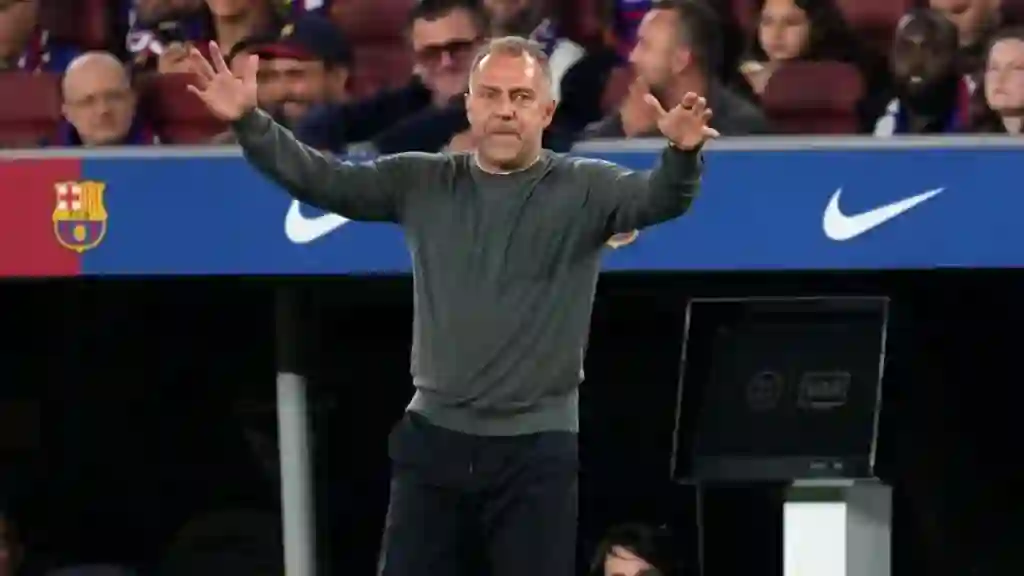
Barcelona Tactical Flaws Exposed as Real Madrid Outthink Hansi Flick
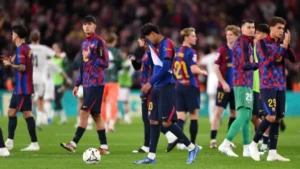
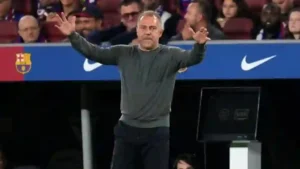
Barcelona tactical flaws came under intense scrutiny after Real Madrid claimed a 2-1 Clásico victory on October 25, 2026. Hansi Flick’s players struggled to find answers against a disciplined opponent. Meanwhile, José Mourinho used Madrid’s organization and counterattacking threat to secure three valuable points.
Kylian Mbappé scored twice for Real Madrid, while Raphinha netted Barcelona’s equalizer. The result ended Barcelona’s nine-match winning start in La Liga. However, the Catalan club remained top of the table, three points ahead of Madrid.
Barcelona tactical flaws disrupted midfield creativity
Barcelona struggled to connect midfield with attack during important periods of the match. Consequently, several promising moves ended before the forwards could threaten Madrid’s goal.
According to analysis published by Goal, which referenced Spanish newspaper AS, Barcelona lacked their usual energy and attacking direction. Moreover, Madrid limited the spaces that Flick’s players normally use to create opportunities.
Pedri and Fermín López could not consistently combine in dangerous positions. As a result, Barcelona lost an important route through the center. Their wide attacks also produced fewer clear opportunities than expected.
Why Lamine Yamal found the Clásico difficult
Lamine Yamal remains one of Barcelona’s most creative players. Nevertheless, Madrid restricted his influence by protecting the areas around him. The young winger also missed a valuable chance before halftime.
Barcelona attempted to increase the pressure after the break. Indeed, Raphinha’s equalizer briefly changed the momentum. Yet the team still struggled to turn sustained attacks into a winning goal.
Flick could have explored different attacking positions or quicker changes. Such adjustments might have created new passing options. However, no individual tactical change could have guaranteed a different result.
Mourinho’s organization punished Barcelona’s risks
José Mourinho balanced disciplined defending with purposeful transitions. Rather than sitting deep throughout the match, Madrid looked for opportunities to move forward quickly. This approach exposed the spaces behind Barcelona’s advanced players.
Madrid’s winning goal highlighted that danger. Eduardo Camavinga launched a late counterattack and supplied Mbappé, who finished the move. Consequently, Barcelona’s search for a winning goal ended in defeat.
Madrid also showed composure under pressure. Their defenders protected key areas when Barcelona pushed forward. At the same time, the visitors maintained a threat whenever possession changed hands.
Flick acknowledges a lack of freshness
After the game, Flick acknowledged that Barcelona lacked freshness. He pointed to a demanding schedule and extensive travel. However, he refused to use fatigue as an excuse for the result.
The defeat followed another difficult match against Paris Saint-Germain in the Champions League. Therefore, the coaching staff faces questions about recovery, squad management and tactical flexibility.
Late adjustments also attracted attention. Goal’s analysis questioned whether Barcelona reacted quickly enough when Madrid disrupted their usual attacking patterns.
What Barcelona must improve next
One defeat does not define Flick’s entire project. Nevertheless, the Clásico exposed problems that stronger opponents may exploit again. Barcelona need greater variety, faster decisions and better protection during attacking transitions.
For Madrid, the victory demonstrated the value of preparation and discipline. For Barcelona, it offered a clear warning about relying on familiar solutions.
Follow further developments and read the latest football news on Koora Live.
Sources: Koora Zone
.
Sources: Goal’s original analysis and Reuters match coverage. News feed supplied by Highlightly.